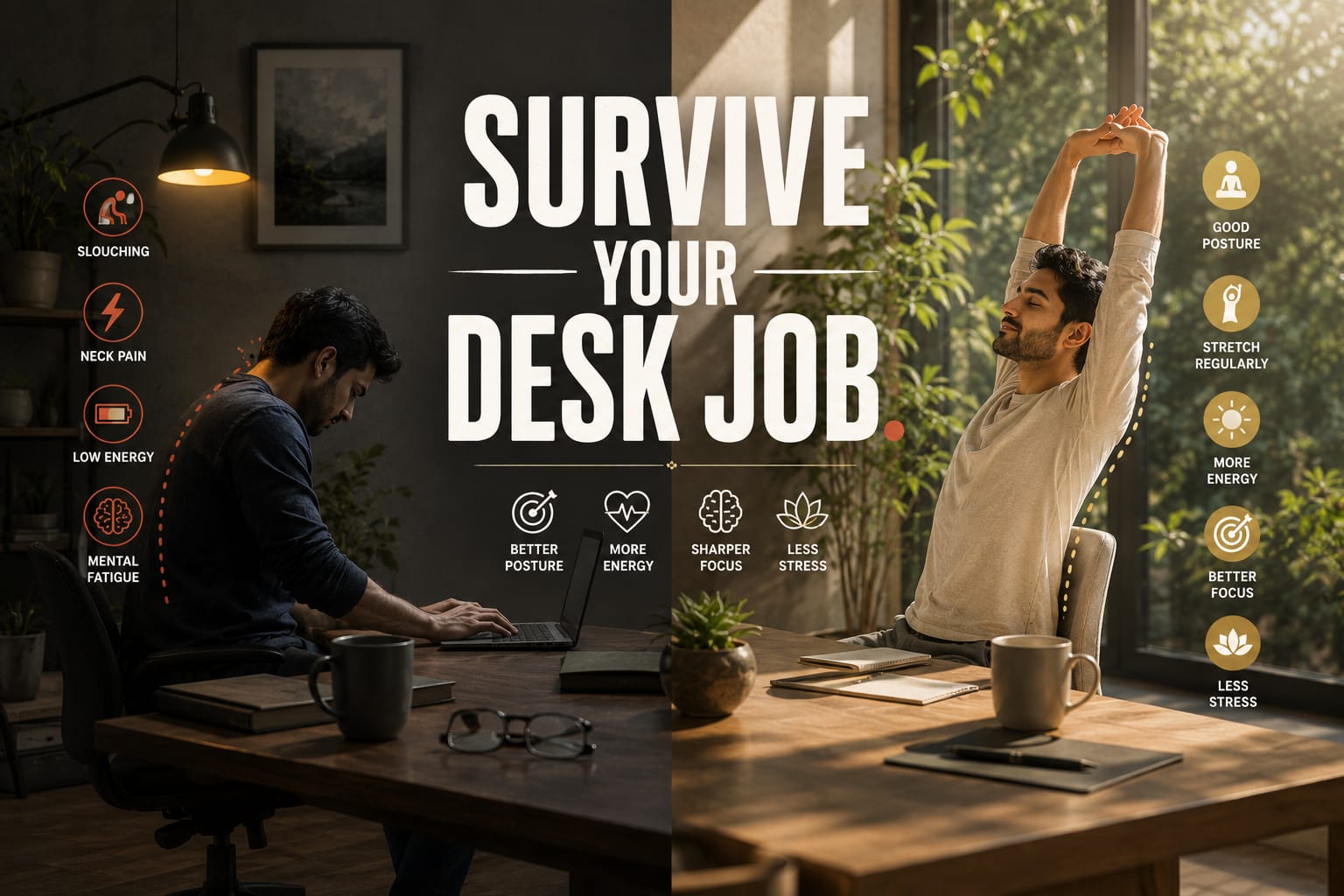
If your workday looks like eight-plus hours of sitting, scrolling, and staring at a screen, you’re not alone — and you’re not imagining the toll it takes. Research shows office workers spend roughly two-thirds of their working hours sitting, often in uninterrupted stretches, and that pattern is linked to a higher risk of cardiovascular disease, weight gain, back pain, and even mood dips. The good news: you don’t need a treadmill desk or a two-hour gym session to fight back. A handful of small, repeatable habits — done consistently — can protect your body and your mind without derailing your workday. This guide breaks it down into five practical pillars you can start using today.
Why Desk Jobs Are Harder on You Than They Look
Sitting itself isn’t the enemy — it’s uninterrupted sitting that causes trouble. Every 2-hour stretch of continuous sitting has been linked to measurable increases in obesity and mortality risk, and desk-based employees are typically sedentary for 66–82% of their workday. Over time, this shows up as:
- Tight hip flexors and a weakened core from staying folded at 90 degrees
- Rounded shoulders and “tech neck” from leaning toward a screen
- Sluggish circulation, which can cause achy, swollen legs by late afternoon
- Blood sugar and metabolic strain, since muscle activity helps regulate both
- Mood and focus dips — sedentary behavior is linked to higher rates of anxiety, low mood, and reduced cognitive sharpness
Here’s the encouraging part: research on “exercise snacks” — short, frequent bursts of movement — shows that breaking up sitting even once an hour meaningfully improves circulation, energy, and focus, independent of whether you also exercise outside of work. You don’t need a lifestyle overhaul. You need better breaks.
Pillar 1: Movement Snacks — Small Doses, Big Payoff

Think of these as two-to-five minute “snacks” of movement you can fit between emails.
- Every hour, stand up. Set a recurring phone or watch alarm — this single habit does more for your long-term health than any single workout.
- Desk stretch mini-set: neck side stretch, shoulder rolls (10 forward, 10 back), seated spinal twist, chest opener (clasp hands behind your back and lift gently), hip flexor stretch by standing and stepping one foot back.
- Calf raises during calls. Do 15–20 while you’re on a phone call or half-listening in a meeting.
- Walk your meetings. Any call that doesn’t need a screen is a walking call.
- Take the long way to the water cooler, bathroom, or printer — it adds up faster than you’d think.
A simple rule to anchor the habit: move for 2–5 minutes every hour you’re seated. That’s it. Studies suggest short workplace movement breaks are also linked to sharper focus and creativity in the hours that follow, so this isn’t just a body fix — it’s a productivity one too.
Pillar 2: Desk Setup That Works For You

Your chair, screen, and keyboard height quietly shape your posture all day, whether you notice it or not.
- Screen height: top of the monitor at or just below eye level, so you’re not tilting your chin down for hours
- Elbows at roughly 90 degrees with wrists neutral (not bent up or down) while typing
- Feet flat on the floor or on a footrest, knees roughly level with hips
- Lower back supported — a rolled towel or small cushion works if your chair doesn’t have built-in lumbar support. Building strong back and core muscles is the secret to pain-free sitting. Read about how simple strength habits helped me in Fitness After 40: What Actually Worked When Every Diet Failed.”
- 20-20-20 rule for your eyes: every 20 minutes, look at something 20 feet away for 20 seconds to ease digital eye strain. If your eyes get dry or tired by 3 PM, check out my step-by-step guide on 6 Simple Eye Exercises for Computer Users to stop screen strain fast.”
None of this requires new furniture. A stack of books under a laptop, a cushion behind your lower back, or simply adjusting your chair height can shift you from “slumped” to “supported” in under five minutes.
Pillar 3: Fuel That Keeps You Steady, Not Sluggish

Desk jobs make it easy to snack on autopilot or skip meals until you’re starving. Both wreck your energy and focus.
- Anchor meals with protein and fiber (eggs, dal, paneer, beans, nuts) to avoid the 3 p.m. energy crash
- Keep grab-and-go snacks within reach: fruit, roasted chana, nuts, yogurt — so the vending machine isn’t your only option
- Separate eating from screens when you can, even just for lunch — mindless eating at your desk makes it easier to overeat and harder to actually feel satisfied
- Hydrate on a visual cue: keep a bottle on your desk and refill it every time you stand up — it pairs your movement snack with a hydration habit automatically
Pillar 4: Protecting Your Mind, Not Just Your Body

The mental load of desk work — back-to-back meetings, constant notifications, decision fatigue — is just as real as the physical strain. A few low-effort resets:
- Box breathing between meetings: inhale 4 counts, hold 4, exhale 4, hold 4. Three rounds resets your nervous system in under a minute.
- A screen-free micro-break: even 5 minutes of looking out a window or stepping outside can lower stress and restore focus.
- Single-tasking blocks: pick one 25–30 minute stretch to close every tab but the one you’re working on. Multitasking during desk work quietly raises cognitive fatigue over the day.
- A hard stop ritual: a two-minute routine (closing your laptop, writing tomorrow’s first task) that signals to your brain the workday is actually over.
Pillar 5: Build a Realistic Daily Rhythm

Trying to remember all of this at once is a recipe for doing none of it. Instead, anchor habits to things you already do:
| Trigger | Habit |
|---|---|
| Sit down at your desk | 1 minute of stretching |
| Every hour (set an alarm) | Stand + 2-minute movement snack |
| Every phone call | Stand or walk |
| Lunch | Eat away from your screen |
| 3 p.m. slump | Protein/fiber snack + short walk |
| End of workday | 2-minute shutdown ritual |
Start with just one or two of these. Once a habit feels automatic — usually after a couple of weeks — layer in the next one.
Frequently Asked Questions
Is a standing desk enough to offset sitting all day?
Standing desks help with circulation and posture, but standing still for hours has its own downsides. The real fix is movement variety — alternating sitting, standing, and short walks — rather than replacing one static position with another.
How much movement do I actually need if I sit all day?
Research suggests 60–75 minutes of moderate activity a day can substantially offset the risks of a sedentary job. That can be a mix of a daily walk plus hourly movement snacks — it doesn’t need to happen in one gym session.
I don’t have time for breaks during a packed workday. Where do I start?
Start with the smallest possible habit: standing up once an hour. It requires no equipment, no schedule change, and it’s the single highest-leverage habit on this list.
Can desk stretches actually reduce back and neck pain?
Yes — regularly breaking up static sitting with stretches for the neck, shoulders, hips, and lower back is consistently linked to reduced stiffness and musculoskeletal discomfort in desk workers, as long as it’s done consistently rather than occasionally.
Conclusion
You don’t need to overhaul your job, your furniture, or your schedule to protect your body and mind from the effects of desk work. What actually moves the needle is small, repeatable friction — standing once an hour, adjusting your screen height, eating a snack away from your inbox, breathing for sixty seconds between meetings. Pick one habit from this guide and start today. Your body — and your focus — will feel the difference by the end of the week.
Your turn: Which habit are you starting with this week? Save this guide, share it with a fellow desk-bound friend, and check back on Healthy Living Hub for more Move, Fuel, and Mind content built for busy, health-curious people.
This post is for general educational purposes and isn’t a substitute for personalized advice from a doctor or registered dietitian, especially if you have existing health conditions.
Leave a Reply